

Home is more than four walls and roof. Home is a door opening to you, your family, your pets, your lifestyle, your neighborhood, your community, your city. It’s all encompassing on so many levels.
Why Investors Need the Right Lender
Why the right lender matters for real estate investors—and how smart financing can strengthen your offers, protect your ROI, and help you scale faster in the Richmond market.
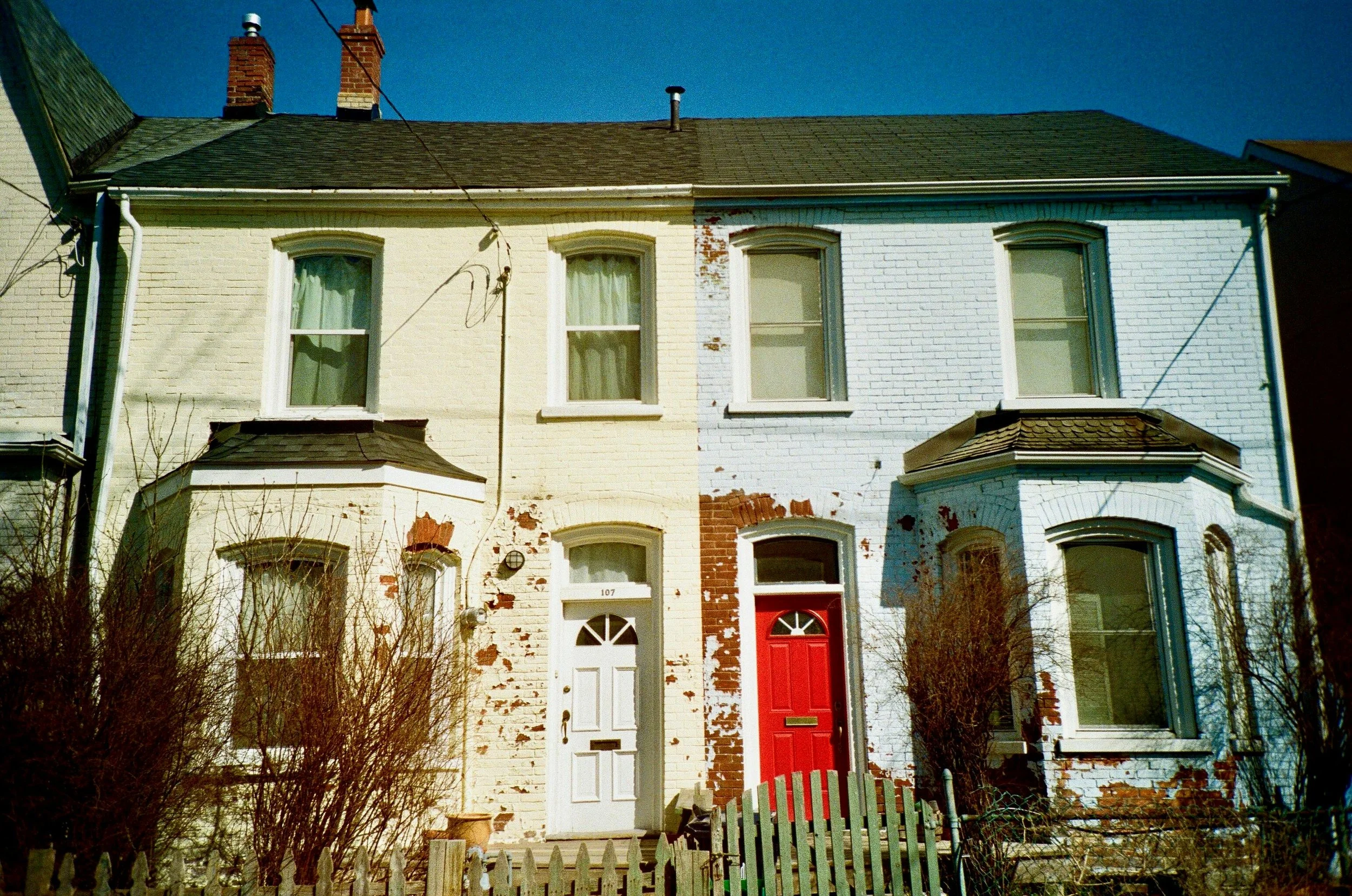
Photo by Jill Evans
Real estate investing moves fast. Richmond’s market especially loves to keep you on your toes—one minute you’re running numbers on a duplex in Northside, the next you’re in a bidding war with three cash buyers and someone’s uncle who’s “thinking about getting into flipping.”
And while investors obsess over cap rates, rents, and whether the roof is about to retire, too many skip the most crucial part of the whole equation:
Your lender. Your actual teammate. Your deal’s co-pilot.
Not all lenders understand investors, and that’s where deals fall apart. If you want to make money—not headaches—you need the right person handling your financing.
Here’s why.
Investors Live and Die by Speed and Certainty
This isn’t the land of slow underwriting and surprise conditions. Investment deals move fast, and you need someone who actually answers the phone.
A great investment lender understands:
How to close quickly
How to communicate clearly
How to underwrite investment properties
Your offer is only as strong as the person backing your financing.
Investor Loans Are Their Own Animal
This is not 30-year conventional suburbia. Choosing the wrong lender can wreck cash flow before closing day.
The right lender knows:
DSCR loans
Portfolio products
Renovation financing
Short-term + bridge options
How to structure deals that actually make sense for investors
Investors Need Problem-Solvers, Not Paper-Pushers
Investment properties rarely behave. They come with tenants, half-finished renovations, title issues, or “exterior character.”
A good lender doesn’t panic…they troubleshoot. They know how to pivot. They get ahead of problems so your deal doesn’t crumble.
The Right Lender Understands Richmond’s Rhythm
You want someone who knows the market—not someone googling ZIP codes.
Great investor-focused lenders know:
Which neighborhoods rent easily
How appraisers treat multi-units
What sellers respond to
How to structure your file so your offer lands
Your Financing Reputation Follows You
Investors who consistently close smoothly get more opportunities. Agents talk. Sellers remember. Lenders build your credibility before you even write the offer.
Show up with a stellar lender behind you, and suddenly:
Your contracts get picked
Your timelines tighten
Your momentum grows
Show up with the “low-rate, no-service” option, and you’ll be explaining delays to everyone, including your own future self.
The Right Lender Protects Your Long Game
This is wealth-building, not one-off buying.
A smart lender helps you:
Maintain liquidity
Preserve your debt ratios
Avoid tax-time surprises
Scale intentionally
Plan your next buy while finishing the current one
A bad one just closes the loan and disappears.
The Real(t)
Your lender can make you money or cost you money—before you ever pick up the keys.
Investors need lenders who speak the same language, move at the same pace, and understand the strategy behind every purchase. If you want your investments to grow instead of stall, choose your lending partner like it actually matters. They are like a good hair stylist, once they give you a great look, you stick with them.
If you want a vetted list of investor-friendly lenders I trust here in RVA, I’ve got names. Good ones.
Just reach out to me.

Changing the mindset
Buying a home today isn’t impossible—it’s about mindset. I share how to rethink homeownership, build equity, and buy smart in any market.
As the shift this year for me went from buyer to seller, I could not help but be faced with the challenges that brought my buyers to disappearing acts. I for one am no stranger to the difficulties everyone has faced these past few years in achieving home ownership. You’d think a winning lottery ticket had better odds than purchasing a home.If you’ve scrolled through headlines lately, you’d think buying a home right now requires a lottery win, a miracle, and maybe a time machine.
One of the hardest things about my job is —people’s opinions. The truth is, there really isn’t a “right” or a “wrong” time to buy a home. That is all dependent on the needs and ability of the buyer. Now, how we buy homes vs when we buy homes is a different story.
The Shift in Thinking
Buying was such an easy thing to do in the recent past. It was a free for all and the biggest question was “how much more am I going to bid on this home”. Where once the list was number of bedrooms, baths, and square footage has now been replaced with shifts in the mindset. what was once $350K affordability is now $475-500K. It’s no longer about the “forever” home, but the home that will take you to the next chapter.
We have to stop seeing homeownership as a one-time checkpoint. You might not love taking 2,500 square feet and compromising to 1,800, but it’s doable. Buyers need to change the mindset of perfection to progression. The question should be: What can I live in right now that will help me build the equity I need to obtain the home of my dreams?
Facts
Rates are temporary. Roots are not.
You can refinance a rate. You can’t refinance time lost waiting for perfection.Equity still happens in imperfect markets.
Richmond and the surrounding areas continue to grow. It’s slow and steady, but also people that come here, stay here. Every payment is a small deposit into your future wealth. Think of it as the long game.A home is more than numbers.
It’s stability. It’s security. It’s not paying someone else’s mortgage. It’s knowing that even when the world feels uncertain, you have a place that’s yours.Flexibility is power.
Maybe you buy smaller. Maybe you choose a neighborhood on the rise. The mindset includes creative planning. It’s about the investment whether you decide to rent a room or refresh the components, and if you can just stretch it out a bit, you as a buyer can thrive.
Rewriting the Narrative
Instead of asking, “Is it a good time to buy?” Ask, “Is it a good time for me?” Your goals, your finances, your phase of life, that matters more than someone else’s opinion.
This market rewards clarity. It rewards the buyers who come in informed, grounded, and guided by more than fear. If you can get pre-approved, understand your budget, and stay open to possibilities, you’re already ahead of half the crowd waiting for perfect conditions that may never come.
The Real(T)
Home buying isn’t just a financial decision; it’s an emotional one. You can choose to go out on the pitch or stay on the bench, but sacrificing some square footage at square one will leave you in a better place for the future. Don’t box yourself in and keep telling yourself you can’t because of this and that. The key is to plan, be creative, and think of your future. You define your path—consider possibilities rather than perfections.

Let’s Talk About Gentrification — Because Pretending It Isn’t Happening Helps No One
Gentrification in Richmond isn’t slowing down—but it doesn’t have to mean erasure. Let’s talk about how the city’s rapid growth can honor its roots, keep longtime residents included, and build a future where progress and preservation coexist.

Photo by: Jian Xhin
“I’m all for people becoming a part of our city, but I’m not a fan of people homogenizing it. If you’re going to move to an “up and coming” neighborhood, then contribute to it and respect what was in place.”
Richmond has always been a city of contrasts. Old soul, new blood. Brick and bourbon. Corner stores turned coffee shops. You can stand on a block that’s been the same for fifty years and, two doors down, find a new restaurant bar glowing with Edison bulbs pouring $15 cocktails with a bar full of…non-Richmonders.
That’s the thing about this city — it keeps changing its outfit. And lately, the change feels faster than ever.
“Gentrification” is the word everyone whispers like it’s a curse. And depending on where you stand, maybe it feels like one. Rising home values, safer streets, fresh paint — sure. But also: rent hikes, relocation, and the slow fading of long-held bar stools.
The truth? Gentrification is coming whether we sign off on it or not. The question isn’t if it happens — it’s how we handle it.
Let’s Start With Some Honesty
Richmond’s popularity didn’t happen by accident. People are moving here because it still feels authentic. It’s creative, gritty, soulful — and (for now) a bit more affordable than the bigger metros circling us. But all that love and investment comes with a cost if we’re not paying attention.
When neighborhoods get “discovered,” the ripple isn’t just economic — it’s emotional. The same front porch where someone’s grandma watched the block grow up might now overlook something that doesn’t look like her anymore. I for one can speak to it when I sit on mine and am no longer receiving the Hello’s or Good (insert time of day) by passerby.
So What Can We Do Differently?
Change is inevitable as I say, and although I cherish the nostalgic moments of the Richmond I grew up in, we can’t very well freeze time. But we can grow with intention.
Honor what was already here.
Every street has a story. Know it. Tell it. Whether you’re selling a home or moving into one, carry the history with you instead of deleting it. Tell people about your neighbors. Hell! Get to know the neighbors! You’d be surprised at how much you can learn from them especially in historic areas.
Work with the community, not around it.
Support the locals. If there is anything I cannot stand is watching people move into neighborhoods that don’t contribute or support it. Be a part of it by joining neighborhood organizations, clean-up days, and attend events happening in your area. Love Thy Neighbor people!
Push for fair growth.
Advocate for policies that keep housing mixed — incomes, ages, backgrounds. We need both the dreamers moving in and the folks who’ve been holding down the block for decades. This is essential. Diversity contributes to the thrive of a neighborhood and a good way to learn the history of it. You’re not moving into a hot spot, you’re becoming part of it.
Here’s the Heart of It
Change is natural. Erasure isn’t.
Richmond’s magic has always come from its layers — We are a rich and culturally diverse city. Having transplants isn’t always comfortable, but it does breathe new energy that contributes to old familiar ways. There is a place for everyone, and although gentrification might be inevitable, it doesn’t have to be a force of displacement. I’d like to see it be a movement of renewal with respect to what has been long established.